Dual bases in Datang Zhuji and Anyang Henan, 120 knitting machines, batch-by-batch pressure testing. This page lays out our capacity basis, equipment list and all six processes — see it online before you visit.
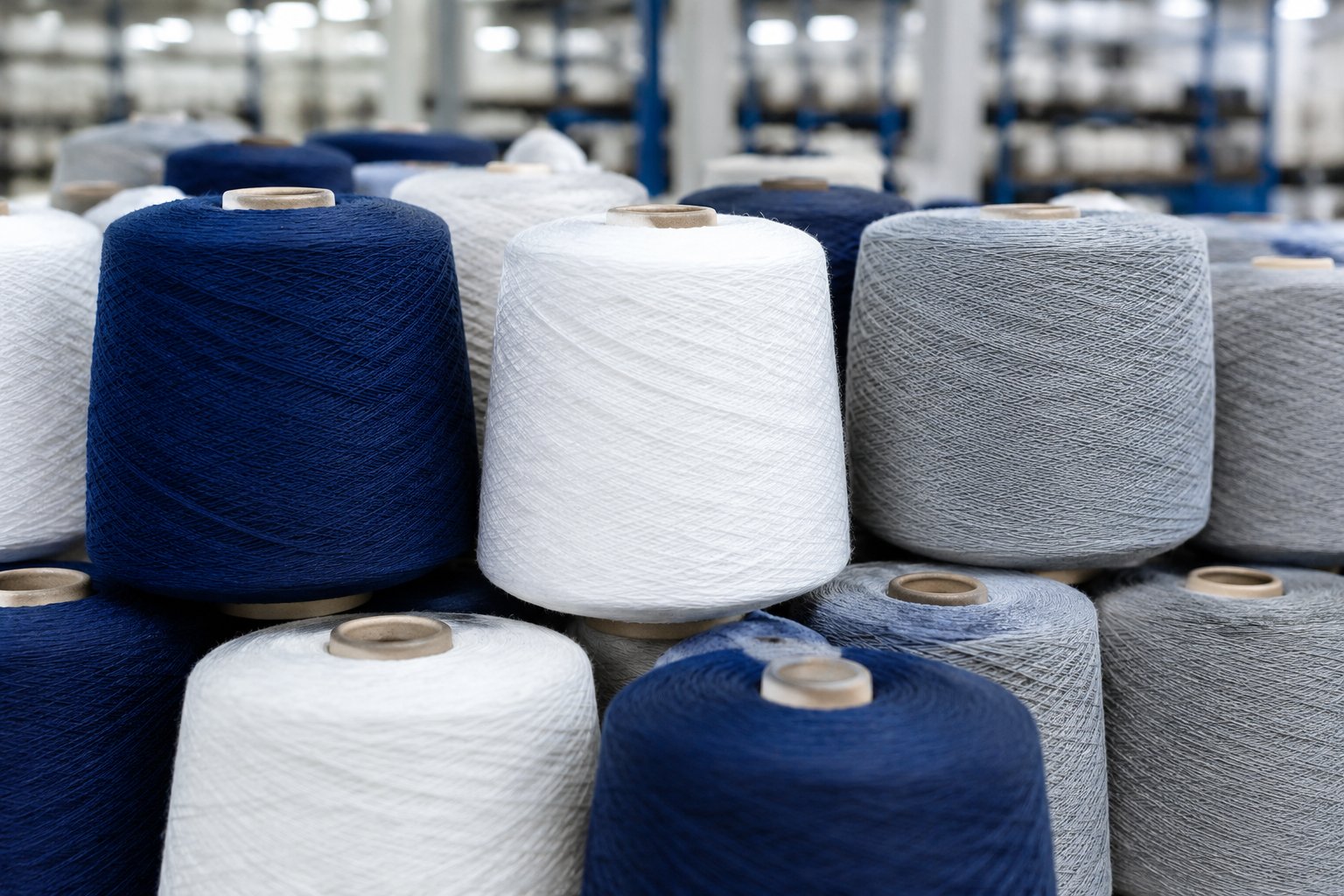
Datang, Zhuji, Zhejiang — the world's largest hosiery cluster: over 25 billion pairs a year, roughly one third of global output, about three pairs of socks for every person on earth annually (Xinhua). The raw-material market alone holds 800+ storefronts; nylon, spandex and covered yarn arrive within a 30-minute loop. Rapid sampling is powered by cluster density.
Sources: Xinhua News Agency (2023–2026 coverage). Cluster-scale figures describe the Zhuji hosiery cluster as a whole, not SOXORIGIN's own capacity; raw-material market data from public Datang Light Textile Sock City materials. news.cn
R&D, medical-grade production and rapid sampling sit in the world's sock capital; volume capacity and the dropshipping warehouse sit in Central China where costs are lower. Two self-operated partner plants route orders by structure — peak seasons never compete for the same lines.
Professional buyers read a factory through its equipment list and its counting basis — so we put both cards on the table.
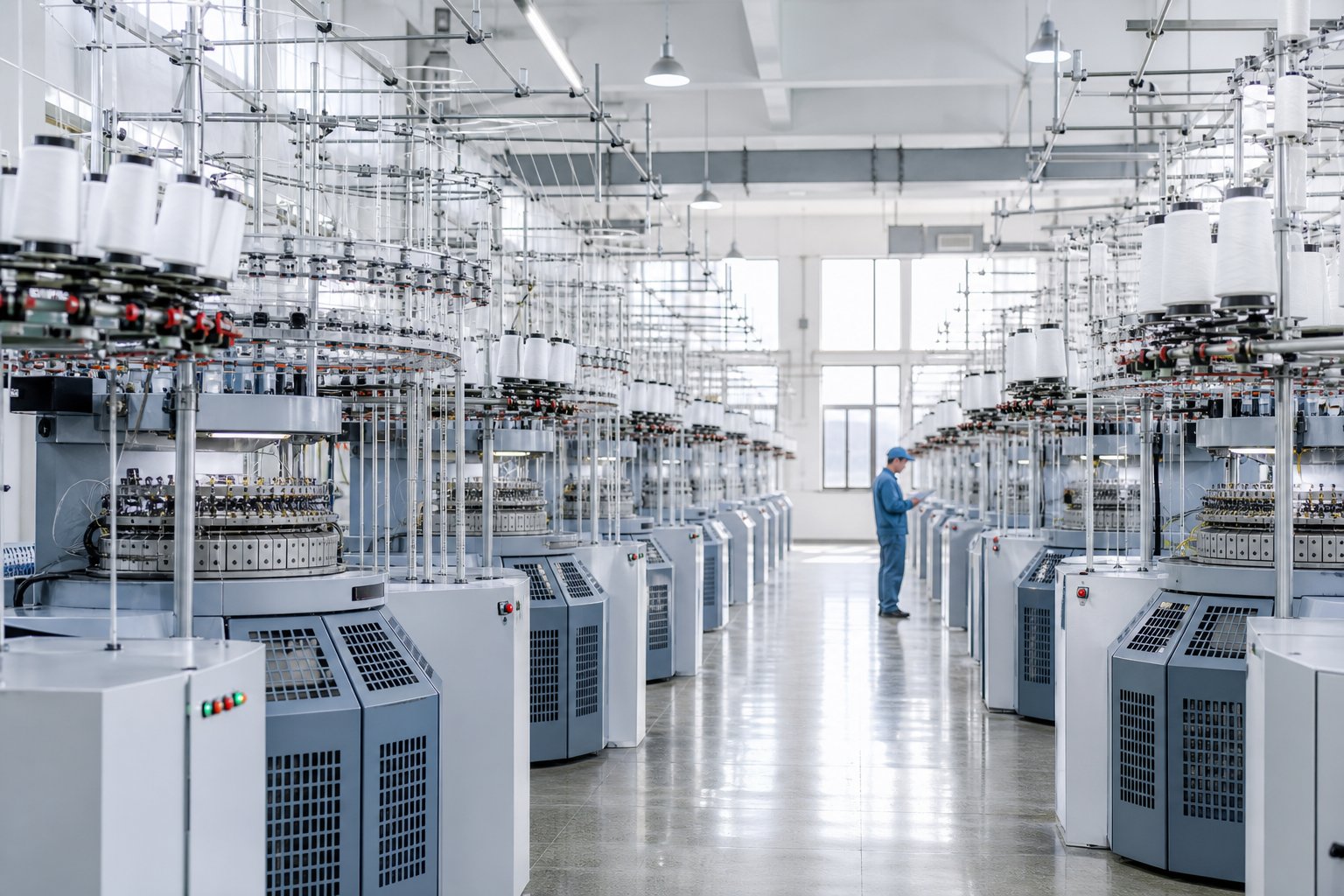
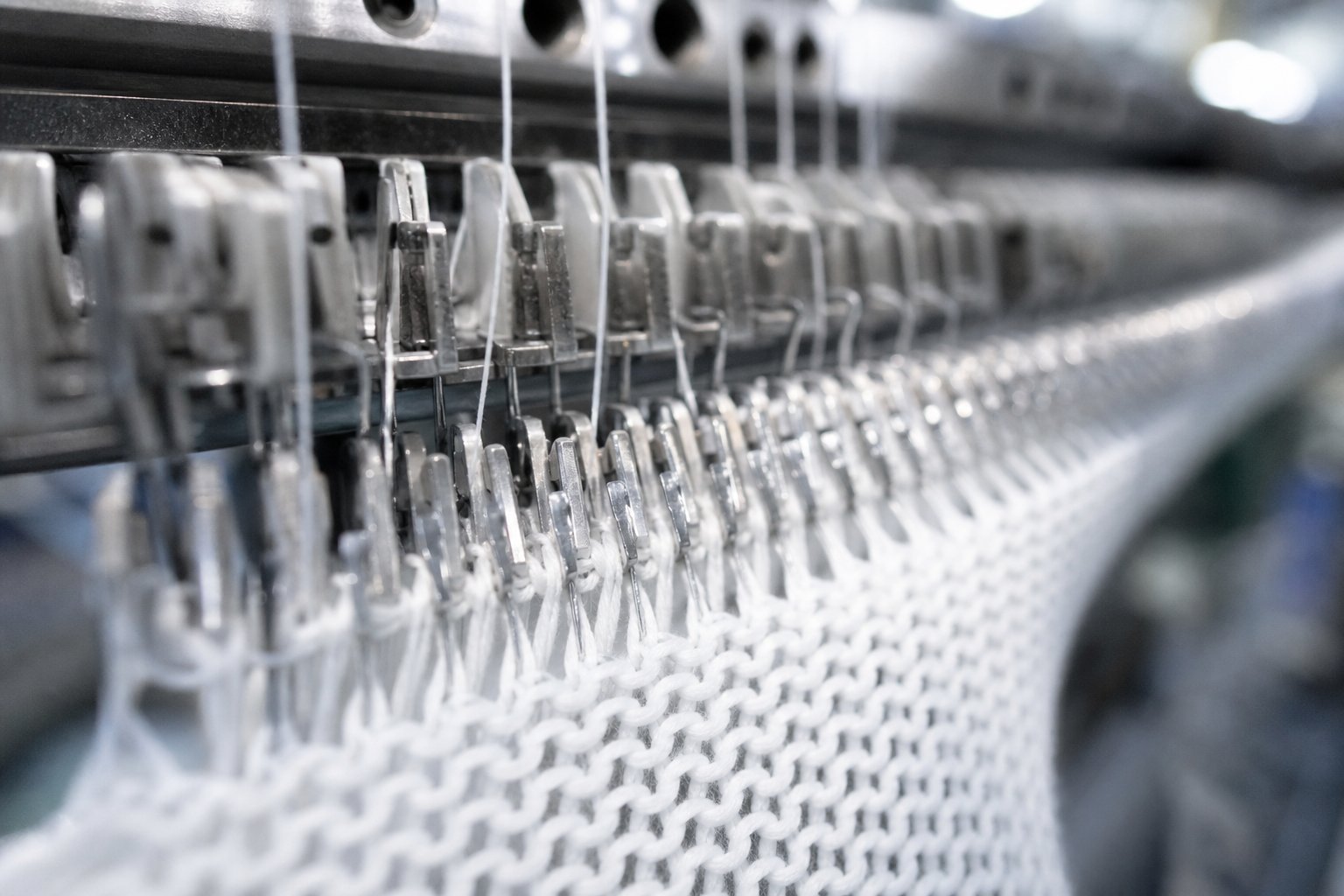
Imported electro-pneumatic medical circular machines: four feeds, reciprocating toe-and-heel, dedicated medical yarn creels. Reserved for RAL CCL1–CCL3 (ankle 18–21 / 23–32 / 34–46 mmHg) medical programs, keeping graduated pressure reproducible batch after batch.
Measures point-by-point pressure along the sock on a prosthetic leg form — ankle (B), calf (C) and other key points — verifying the pressure gradient for every batch; mmHg test reports ship with the goods.
Note: equipment and capacity figures are company-basis sample-draft data, subject to factory audit and contract.
Compression socks are not a knit-and-done category: from yarn ratio to boarding temperature, every process parameter decides whether mmHg is in class — and still in class after 30 days of wear.
Nylon covered yarn and spandex enter the plant blended to recipe; yarn count and retraction inspected batch by batch — compression starts at the yarn.
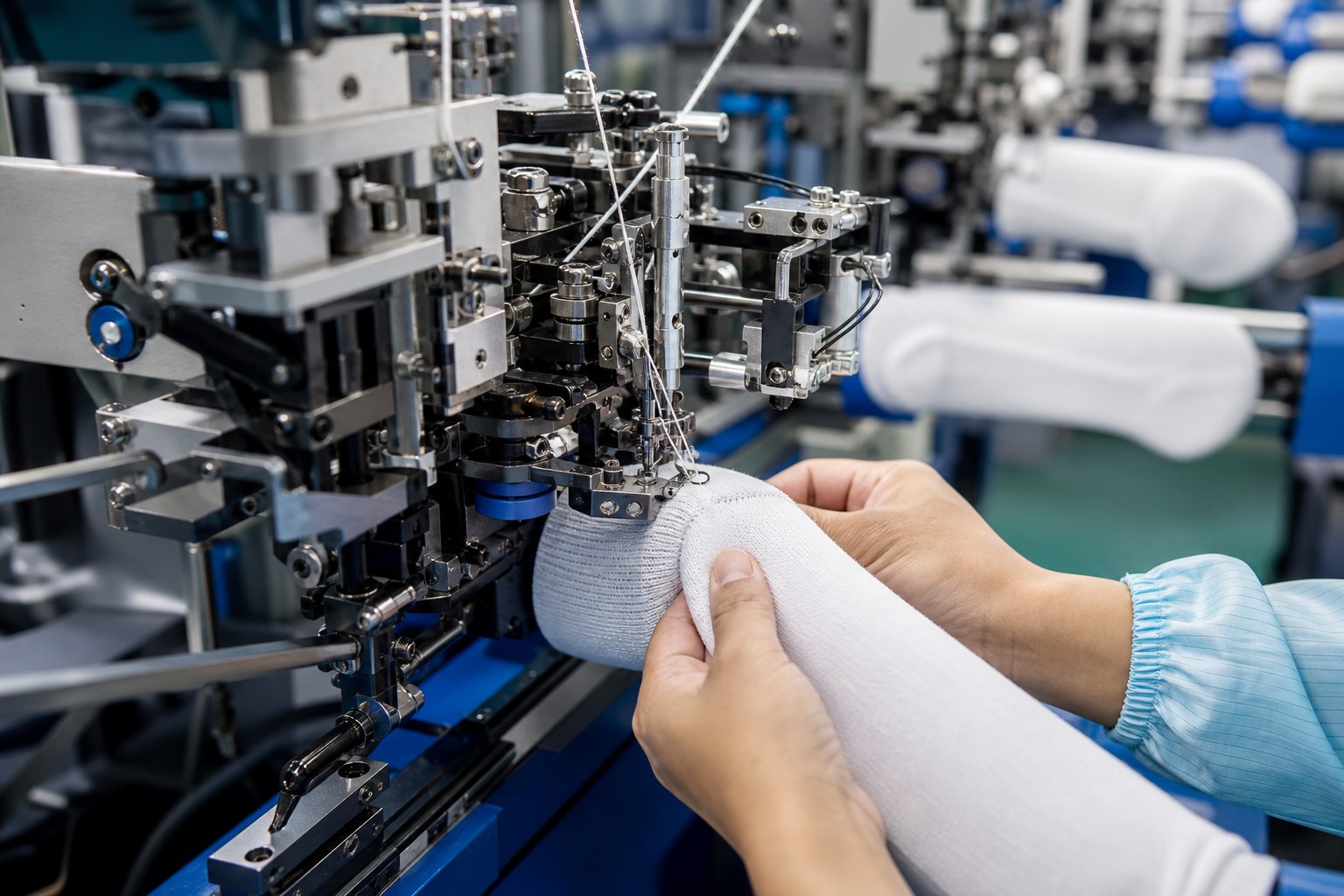
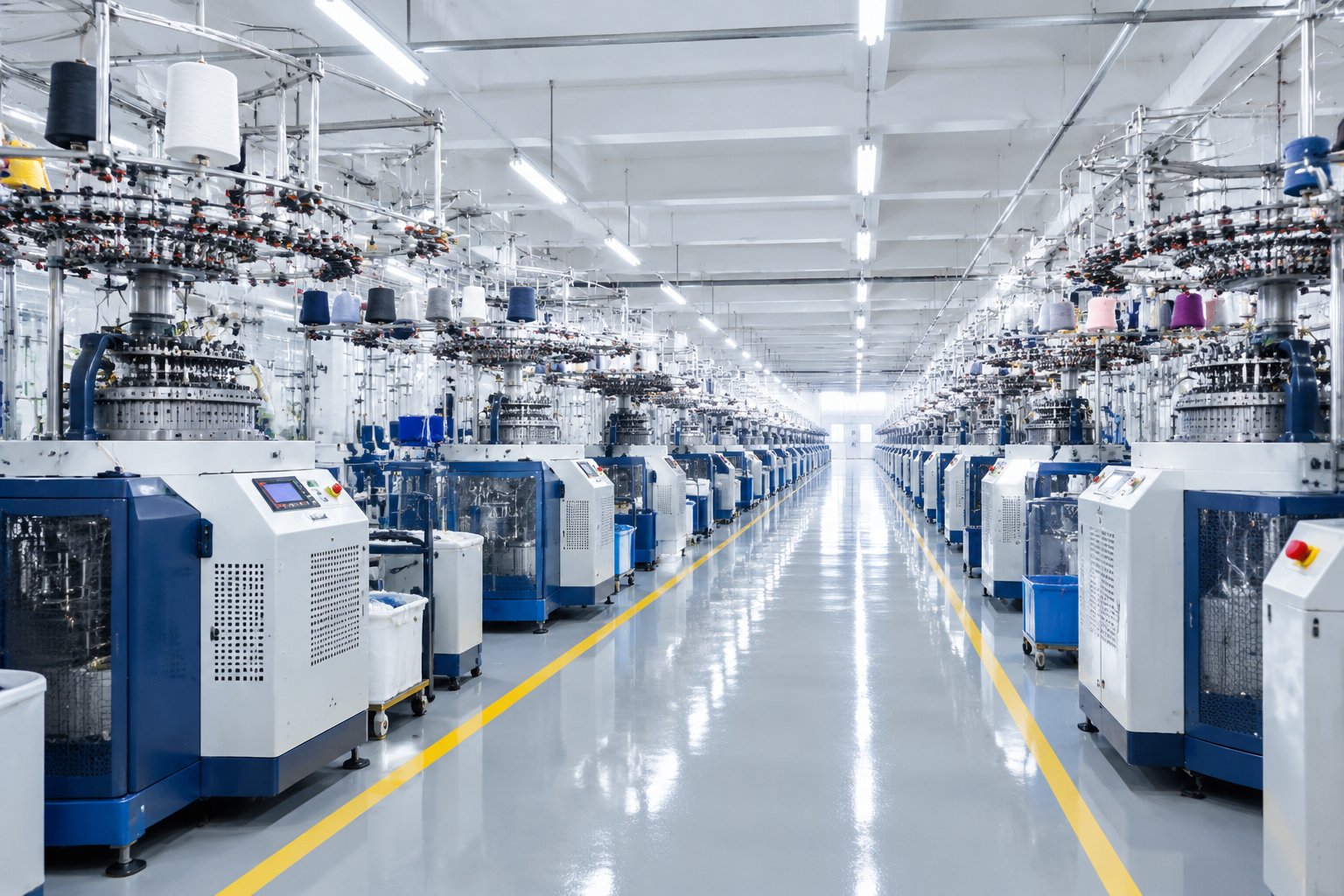
Computerized machines knit the cuff, the ankle-graduated zone and the foot in segments; needle count selected by compression class.
Automatic alignment machines seam the toe with consistent registration and a flat, bone-free join — removing hand-work variance.
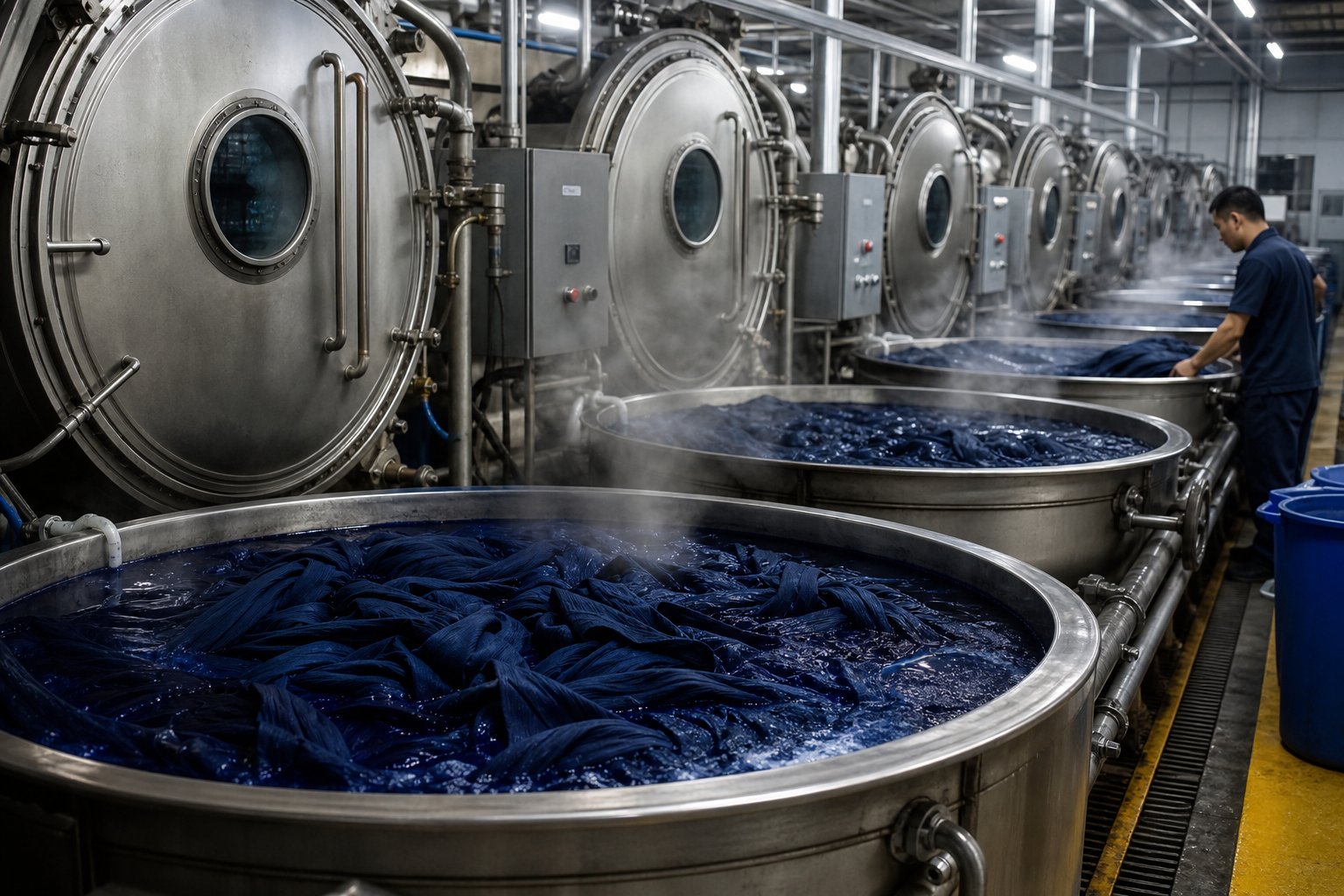
Temperature-controlled dyeing and soft finishing with shrinkage monitored throughout — if shrinkage drifts, the compression class drifts with it.
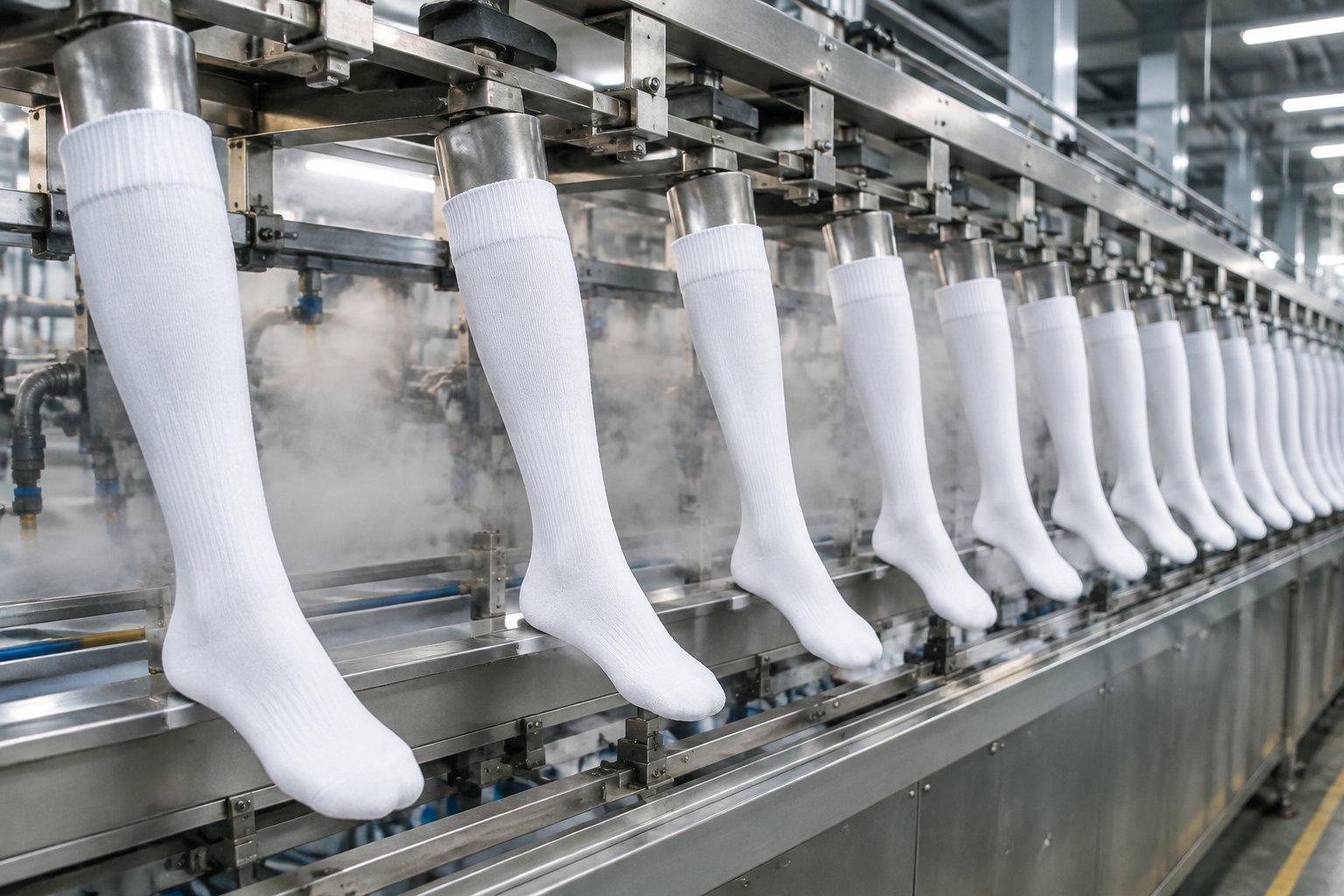
Boarding temperature and time locked to the yarn recipe — foot shape and the ankle-to-calf pressure gradient are fixed here.
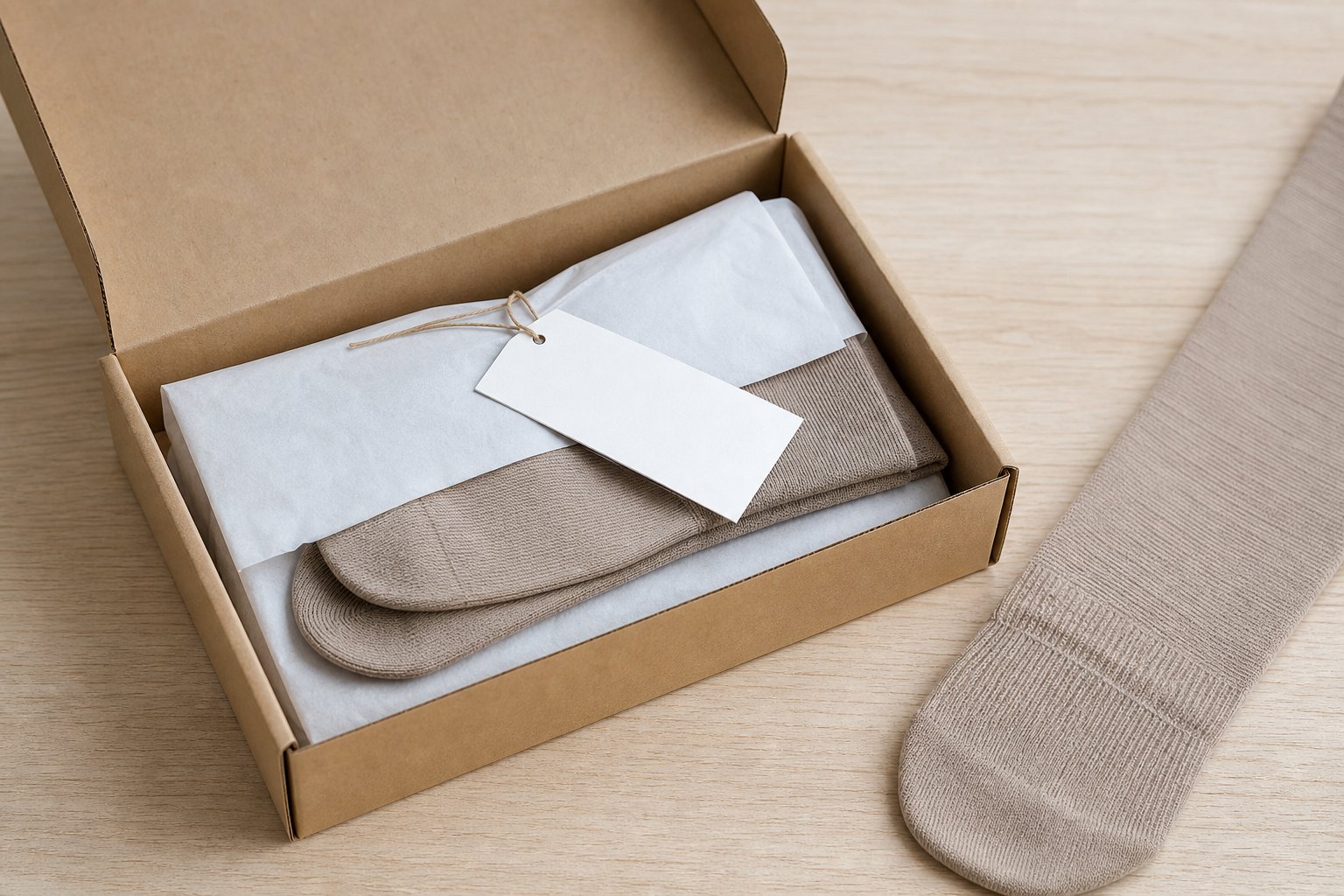
Pressure curves sampled per batch; after pass, private-label packing into stock, with mmHg test reports shipped with the goods.
The global compression garments & stockings market reaches USD 3.44B in 2025 and is expected to hit USD 4.66B by 2030 (CAGR 5.21%). North America is the largest regional market with 37.2% of revenue; e-commerce is the fastest-growing channel at 9.3% CAGR; medical compression stockings contribute 41.8% of revenue. Medical-grade plus online channels is exactly where our dual bases aim.
Source: Mordor Intelligence, Compression Garments & Stockings Market (updated Sep 2025); figures cover compression garments and stockings combined. mordorintelligence.com
Photos from our production bases. Video factory tours are available: live walkthroughs, workshop by workshop, no trip required.
Computerized machines in zoned lines; medical models in a dedicated area with dedicated operators.
Boarding temperature and time set by yarn recipe; the pressure gradient is locked on these boards.
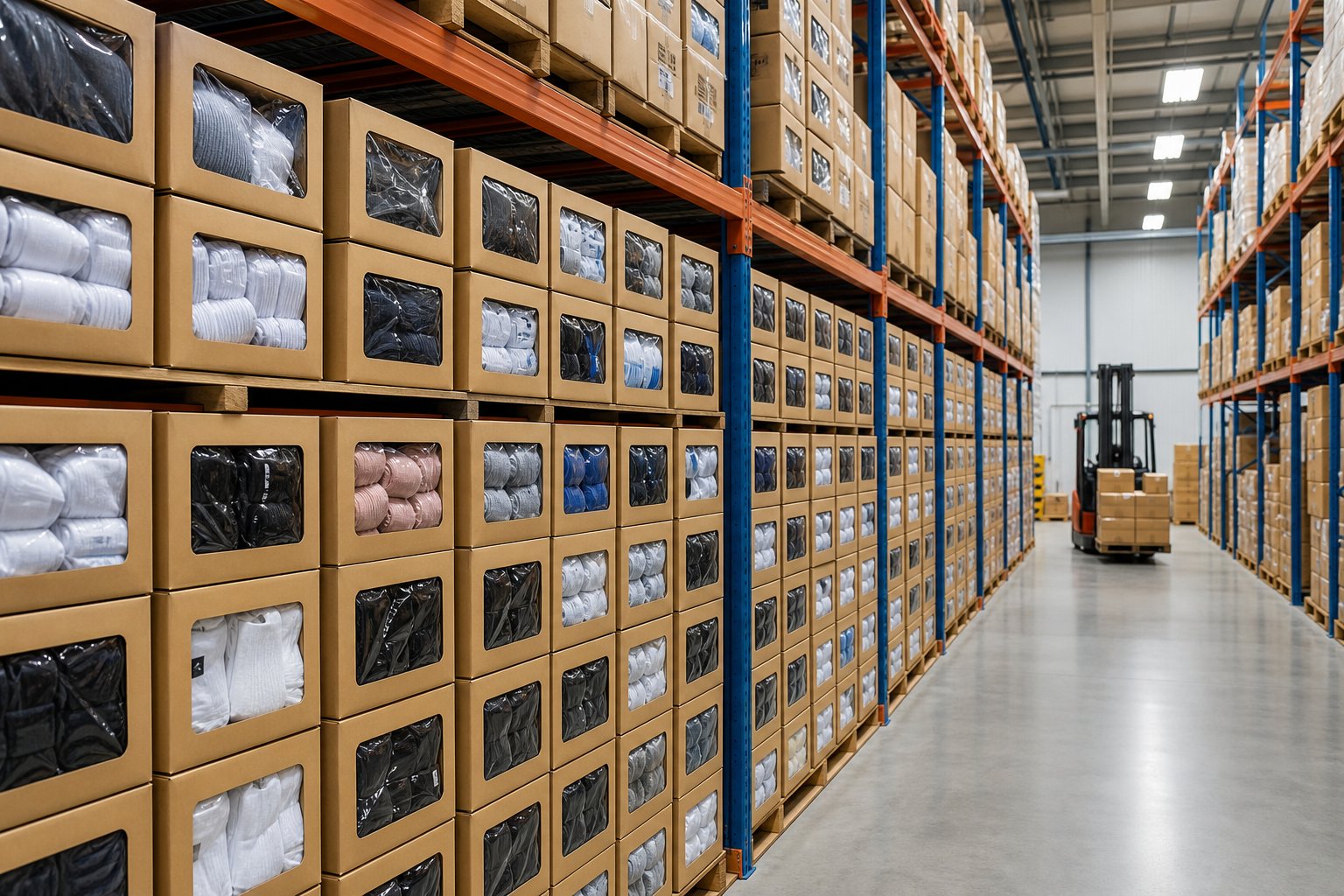
Batches enter the finished-goods area after passing tests; private-label packing and dropshipping pick-pack run on the same floor.
Book a 30-minute video factory tour: live walkthrough of the knitting, boarding and testing workshops — machine nameplates, batch records and test reports verified face to face. Replies within 12 business hours.