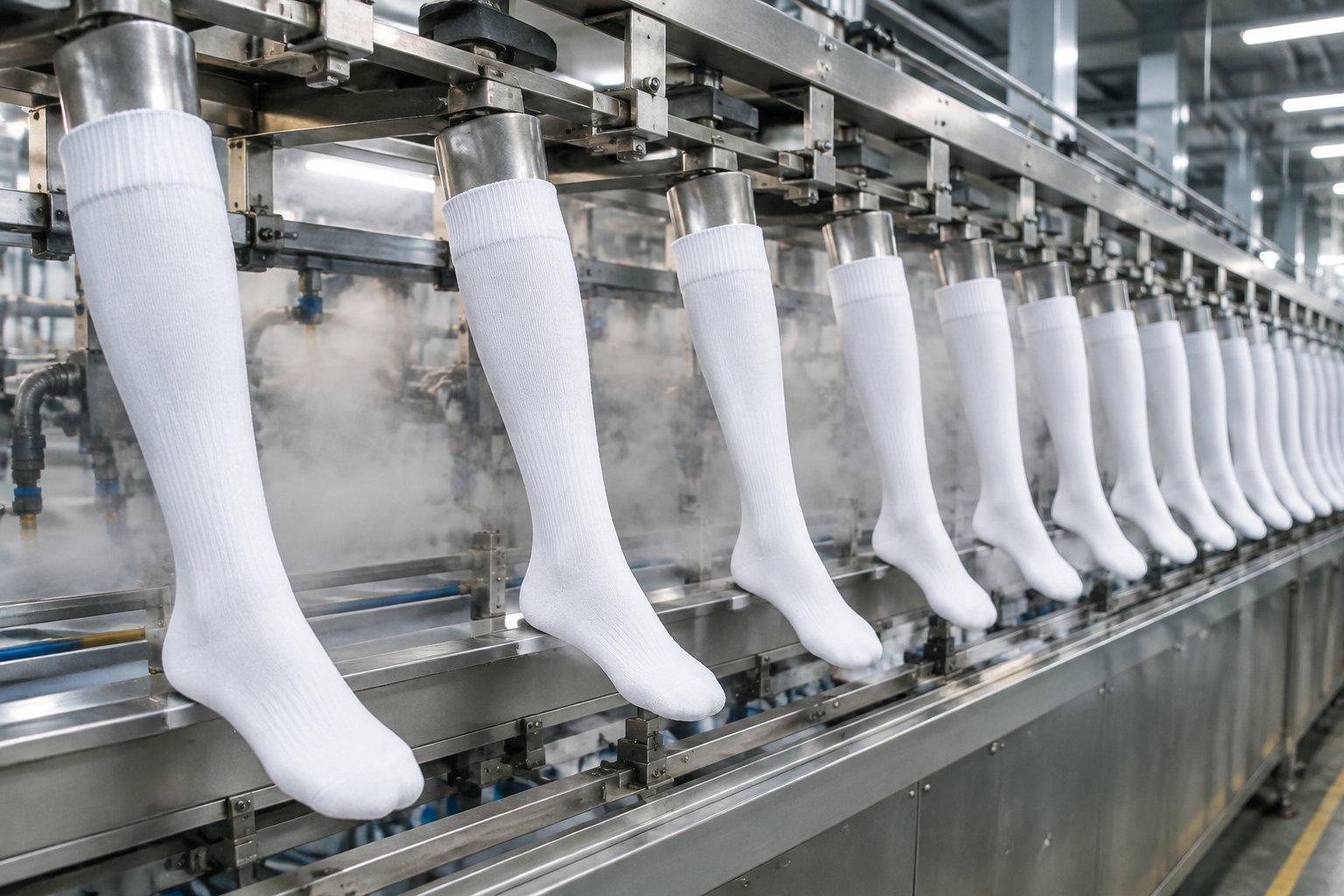
If the compression grade is off spec, nothing else matters
We turn mmHg into a deliverable chain of evidence: production against dual standards, archived pressure curves batch by batch, and certifications and compliance routes you can verify. Audit first, order second — bring your own testing checklist.
The same sock is accepted against whichever standard it ships under. We produce and test to the standard your order specifies, so grade language never gets lost in translation.
US grades (mmHg · industry-common)
EU RAL-GZ 387 (CCL1–4)
Grade
Typical use
Class
Ankle pressure (point B)
15–20 mmHg (light)
Everyday light compression: fatigue from long standing or sitting, pregnancy, long flights and mild swelling. Over-the-counter.
CCL1
18–21 mmHg
20–30 mmHg (moderate)
Medical moderate: varicose veins, moderate edema, post-surgery recovery and DVT prevention — the highest-volume prescription grade.
CCL2
23–32 mmHg
30–40 mmHg (firm)
Firm compression: severe venous insufficiency, post-thrombotic syndrome, lymphedema and similar indications, under medical supervision.
CCL3
34–46 mmHg
— (no common US OTC equivalent)
CCL4 is the highest EU class, for severe indications under medical supervision.
CCL4
≥49 mmHg
Note: US mmHg grades and EU RAL-GZ 387 CCL classes differ in both values and test methods and cannot be converted directly; each order is produced and tested to the standard it specifies. RAL values refer to ankle point B.
Pressure testing capability
Full-length pressure curves plus point-by-point leg-model data
Hand feel cannot tell whether a compression sock is compliant. We run a batch-by-batch testing process on standard equipment, so every bulk lot traces back to a pressure curve.
HOSYcan-type full-length pressure-curve testing to RAL-GZ 387 / DIN 58133, ankle to thigh
MST-type artificial leg models with point-by-point readings at ankle B, calf B1/C and D
Gradient held at approx. 100% ankle, 70% calf and 40% thigh
Durability caliber: pressure loss within 15% over 3 months of normal wear, per RAL
Batch sampling with reports: bulk lots sampled per batch, mmHg test reports shipped with the goods
Testing setup and acceptance criteria above reflect our in-house caliber; final terms are subject to factory audit and contract.
Inspection flow
Five inspections stop problems before shipment
1
Incoming inspection
Covered yarn, spandex and other inputs tested lot by lot; blending ratios and lot records kept traceable.
Every yarn lot tested
2
First-article inspection
Full-item testing on the first article after any machine changeover or new batch; bulk starts only after a pass.
Full checks on first article
3
Patrol inspection
In-process pressure spot checks at set intervals during knitting; deviations trigger immediate machine adjustment.
In-knitting pressure spots
4
Finished-goods QC
Post-boarding sampling of full-length pressure curves, plus appearance, size and toe-seam checks.
Post-boarding full-length curves
5
Shipment sampling
Pre-shipment inspection to AQL sampling standards, with test reports delivered alongside the goods.
AQL sampling · reports included
Certifications & systems
Certificates you can verify, not wall decoration
Each entry states its coverage and boundaries; certificate numbers and originals can be verified during a factory audit. Anything not held or still in progress is not listed.
OEKO-TEX Standard 100Textile ecological safety: harmful-substance testing from yarn to finished goods, covering colorfastness, pH and restricted substances.
ISO 9001Quality management system across incoming materials, knitting, boarding, inspection and shipment — open to customer and third-party audits.
BSCISocial-responsibility audit covering working hours, remuneration and occupational health & safety; results shareable with buyers.
RAL-GZ 387European quality-assurance standard for medical compression stockings: the testing basis behind CCL1–4 classes and the 3-month pressure-decay limit.
FDA 510(k) route supportMarket-dependent: SKUs with medical claims follow the FDA 510(k) clearance route (21 CFR 880.5780, product code DWL), backed by registration and technical documentation.
EU MDR Class I self-declarationEU: medical compression stockings are generally Class I under MDR (EU 2017/745), via self-declaration of conformity with technical documentation and an EU authorized representative.
Note: the above lists held systems and compliance routes and is not a claim about specific batches; certificate numbers and originals can be verified at a factory audit.
Durability & care
If compression can't survive washing, it isn't compliant
No slogans, no invented numbers: each item follows a recognized test caliber, and measured data ships with the report.
Pressure retention after washing
Tested per a 30-wash-cycle retention caliber; decay judged against the applicable standard limits, measured report with the goods.
Colorfastness & shrinkage
Wash and rub colorfastness plus washing shrinkage per common textile testing calibers; acceptance limits written into the tech pack and inspection standard.
Transit & drop testing
Packaging verified against drop and stacking test calibers with cross-border long-haul in scope; sampled and archived before shipment.
Audit us first — bring your own testing checklist
Sample test reports, pressure-curve data and certification documents are provided item by item during sampling and audits; replies within 12 business hours.